Tuesday, 24 April 2012
Monday, 6 February 2012
Modern Love
DayFour issue 9 Modern Love
Published 2011
To most of us, love is a fundamental emotional need. We want to love and be loved. Love is the universal subject of musicians and artists, and the stock-in-trade of gossip columns.
In Western society, the importance of love, and indeed the definition of love, has changed throughout history. Once upon a time homosexuality was prosecuted, and now we celebrate gay weddings. Once upon a time, love meant a private relationship between a man and a woman, leading to a life-long marriage, children, and the founding of a family. Now, marriage is optional, divorce is normal, and privacy is almost impossible. We look for love on Internet dating sites, and hook up with strangers. At the same time, in the modern world different ideas of love are leading to increasing cultural conflict. Loving who you want, or expressing your love, can incur violence and punishment.
Modern love applies to more than our intimate relationships. Once upon a time, the idea of loving your job would have been unimaginable, and not loving your country would be a treasonable offence. Now we love our football team, or The X-Factor, or Justin Bieber, and express that love in ways our parents never imagined.
For this issue, DayFour contributors considered what, who and how we love. While many of the subjects are timeless – the family, falling in love – the way we approach those subjects – defining family, finding a mate – are pure 21st-century.
Contributors
© All photography and text in Dayfour is copyright the contributors. All rights reserved
The Touch
What is it about our hands that tell us so much about ourselves and, the work that we do?
Have a look at your own hands – what story do they tell?
What is it that connects the eye to hand to heart?
'Our sense of touch', said Barbara Hepworth, 'is a fundamental sensibility ... giving us the ability to feel weight and form and assess its significance'.
The touch of a hand is what gives us the capacity to communicate as unique individuals – with all our faults and blips … we are not machine made.
Irene, The Foundry Manager
As manager of the Royal College of Art’s foundry for many years, Irene is acutely aware of the different attitudes of students passing through the school. ‘There is a tendency just to want to copy objects today,’ she told me. ‘Many students don’t take time to really understand materials and processes. The ones that do produce more interesting work.’
Alessia, the bee keeper
Born in a small rural Italian village, Alessia loves living in London. She is passionate about bees and works seven days a week on rooftops, in allotments, and city farms tending hives and teaching others about beekeeping. Alessia brings to her life in London a desire to support and sustain these often overlooked city dwellers.
Friday, 3 February 2012
Mark Power's Pavillion at Jubilee Gardens takes shape
The barge she sat in, like a burnish’d throne,
Burn’d on the water; the poop was beaten gold,
(Anthony & Cleopatra, Act II scene 3)
Burn’d on the water; the poop was beaten gold,
(Anthony & Cleopatra, Act II scene 3)
Last November I took some pictures of Mark Power Architect's imaginative scheme for Jubilee Gardens on the South Bank. It was exciting to see the building going up on site this week and I will be following it's progress over the next couple of months.
Mark describes his project:
The pavilion canopy’s dramatic boat-shape, floating darkly on its frozen river of glass mirroring its surroundings, is a synthetic device: it will act as a rainwater harvestingimpluvium for the building’s water-hungry uses (fed too by the Royal Festival hall’s groundwater bore-hole), but also as a shape-shifting visual pun, super-imposing several local associations: Roman galley remains discovered beneath County Hall; 18th C follies, fountains and pleasure gardens; theatre, variety and entertainment; working timber wharves.
South Bank old timer Shakespeare’s vision of Cleopatra in her barge seemed wryly to summarise our own reflections, itself a recollection of his youthful sight of Elizabeth I on the Thames:
Burn’d on the water; the poop was beaten gold,
(Anthony & Cleopatra, Act II scene 3)
Friday, 21 October 2011
Wednesday, 12 October 2011
if you go down to the woods today ...
portraits of Lola, Umi, Eoban and Maud
by Kelly Hill
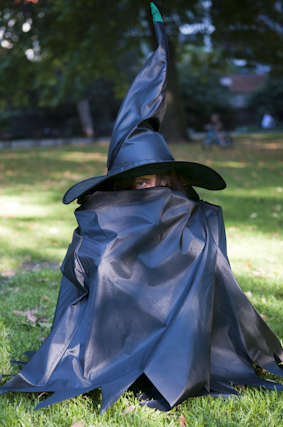
My extremely talented friend Misia Gobdeski and her business partner, Sarah Higgs, of costumise - have made a box of amazing outfits for the Museum of Childhood's latest exhibition Magic Worlds.
We discovered some very magical creatures and fabulous beings lurking in Bunhill Fields the other day.
portrait of Saoirse
by Kelly Hill
hereford photography festival - open here
Alma and Maud
photograph by Kelly Hill
I am pleased to be part of the HPF’s annual open submission exhibition. Open Here will be exhibited at The Courtyard Centre for the Arts, Edgar Street, Hereford, HR4 9JR between Friday 28th October and Sunday 27th November
The HPF showcases 35 exhibitions and 21 events over 5 cites for 2011, with most of the work being shown in Hereford - over 75 artists and documentary photographers, and the HPF Fringe featuring the work of 20 early career artists.
The 22 photographers featured in Open Here were selected by the HPF panel: Caitlin Griffiths, Artistic Director of HPF; Nina Gustavsson, photographer and tutor at Hereford College of Arts; Melissa DeWitt editor of HotShoe, and Simon Bainbridge editor of BJP.
I will be showing alongside : Alberto Maserin, Alex Currie, Barry Cawston, Celine Marchbank, Chiara Tocci, Cordelia Weedon, Corinne Silva, Douglas Ljungkvist, Elisa Noguera, Enrico Abrate, Jenny Hardy, Jim McKeever, Jo Gane, Jo Metson Scott, Jon Wyatt, Liz Orton, Lydia Goldblatt, Martina Geccelli, Marysa Dowling, Thomas Ball and Toby Coulson.
photograph by Vanessa Winship
Subscribe to:
Posts (Atom)